#
Ethiopia, ‘the horn of Africa’, is situated just north of the equator, in
north-eastern Africa and is bordered by Sudan, Kenya, Somalia, Djibouti and Eritrea.
Long known as Abysinia, it stands between the cultures of the Mediterranean and the
tribal people of Africa and boasts the origins of humankind.
Ethiopia is one of the largest countries in Africa in terms of both area and population,
with an area of 1.2 million square kilometres which is around twice the size of Kenya or
France. The population is approximately 107 million-with the densest population in the
fertile central highlands.
Much of Ethiopia is still wild, and fosters a naivety and freeness of sprit. It has been able to keep its own strong independent character and not be marred by the ways of colonists, still retaining ancient cultures untainted by western influences. It is this uniqueness that gives Ethiopia such a magnetic appeal.
It is a land which has endured many hardships through hunger and fighting but has managed to survive because of its people’s amazingly strong drives to exist. They are a people with an incredible resilience, who show a true pride in their culture and civilisation, which is apparent in their many colourful celebrations.
Nearly 85% of all Ethiopians are engaged in farming and cattle-raising and live in the countryside. The peripheral inhabitants of Ethiopia lead a nomadic and pastoral way of life, whereas the central highlands support farming communities. The Christian highland peoples have followed a biblical, moral and civil code of behaviour for over 16 centuries.
This days Ethiopia, the oldest independent country in Africa, is becoming a quickly emerging country on the travel scene, its cultures and traditions date back 3,000 years and it is a land of extremes, characterized by remote and wild places offering wildlife, adventures, and stunning natural scenery, you can also get a glimpse into the lifestyles of ancient tribes and their unique way of life. Some of the highest and most stunning places on the African continent are to be found here in cradle of civilization. Take an Ethiopia tour and embrace the spirit of Africa at its most pure and raw.
Highlights in Ethiopia
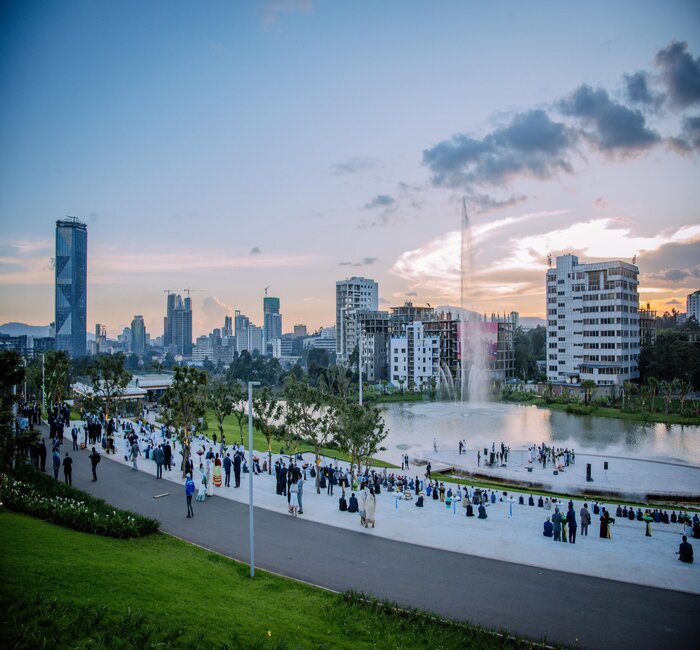
- The capital city Addis Ababa which was found 1887 by emperor Menelik, and its name means ‘new flower’ in Amharic. It hosts east Africa’s largest open air market; a sprawling mass of stalls where one can find just about anything for sale. Churches such as St. George’s cathedral and the cathedral of the Holy trinity give a great insight into Ethiopia’s particular brand of Christianity. A good national museum holds an interesting selection of artefacts from Ethiopia’s wide and varied history.
- The historic city of Harar with its walled town and the mosques there in with many alleyways,
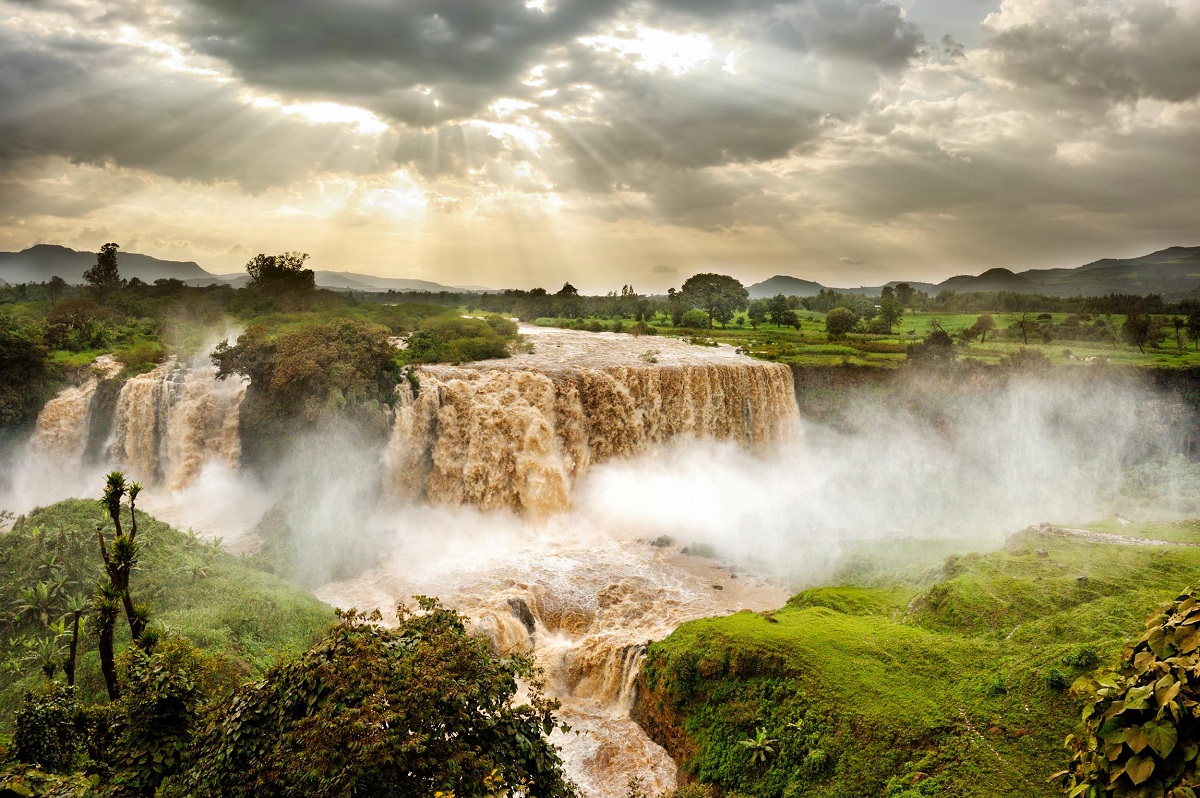
- The city of Bahirdar with the well-known Blue Nile fall and the biggest lake of the country where the famous monasteries and churches with breathtaking murals and frescoes are concentrating, painted in the unique Ethiopian style in the islands. The shoreline is dotted with small villages, whose inhabitants traverse the lake on tankuas, small boats made from papyrus, often carrying impossibly large loads. Lake Tana is a source of the Blue Nile and contains excellent birdlife, as well as hippos
- The royal enclosure at Gonder is one of Ethiopia’s key sites and rightly so. Enshrouded in mystery as its origins, Gonder becomes the capital city of Ethiopia in the 17th century and an important city in the region. What is astonishing about Gonder is its collection of castles, very European in character and seeming very out of place in this corner of Africa. There are several buildings with in the enclosure, including lion’s cage, a chancellery and the royal Archive.
- The northern town of Axum is reputed to have been the capital of the legendary Queen of Sheba, in the 10th century BC. Once a great city and the capital of a powerful empire around the time of the birth of Christ, it is thought by some to be one of the great civilisations of antiquity, controlling the all-important trade routes between Asia and Africa for many centuries. Today it is a site of pilgrimage, containing many important religious buildings as well as palaces and tombs belonging to past Emperors of Ethiopia. The most notable of these is the church of St. Mary of Zion, which is said to contain the Ark of the Covenant and is watched over by a guardian who prevent anyone from seeing it. Axum is also famous for its collection of stelea, sculpted from single pieces of granite and intricately carved. Although some are in ruins, those that remain are the legacy of one of Africa’s most powerful civilisations.
- The rock hewn churches of Tigray region are one of Ethiopia’s most enchanting and fascinating sites. Many of them are carved into sheer cliff faces which take effort to reach, perhaps to protect the treasures that many of them hold in terms of paintings and artefacts, or to provide the solitude necessary for religious meditation. Isolated and mysteries, the churches are still used today and if lucky enough to visit when a religious festival is taking place, unparalleled place to witness Ethiopia’s spiritual traditions. Even without this, they retain an aura which is spellbinding, enhanced by the fact that very few western travellers actually get here. However the time and effort it takes to reach them makes them all the more special.
- The small dusty town of Lalibela in the north of Ethiopia is home to some of Ethiopia’s most amazing sights, a collection of rock cut churches dating back hundreds of years often known as ‘Africa’s petra’. Lalibela is a great centre of pilgrimage among Ethiopians, flocking here to worship, and during religious festivals is packed with priests and monks. Lalibela and the surrounding area are dotted with excellently preserved churches, still used today. Many of them are connected by underground tunnels and passages, with tiny caves hollowed out in nearby walls used as homes for ascetic monks and hermits who stay here for years on end. The churches dated back to the 11th and 12th centuries, and the most spectacular is bete Giorgis, built in the shape of a cross in a large pit in the ground. Some contain ancient religious artefacts, which resident monks are often happy to show to visitors, including intricately decorated crosses and a wooden box said to be carved by king Lalibela.
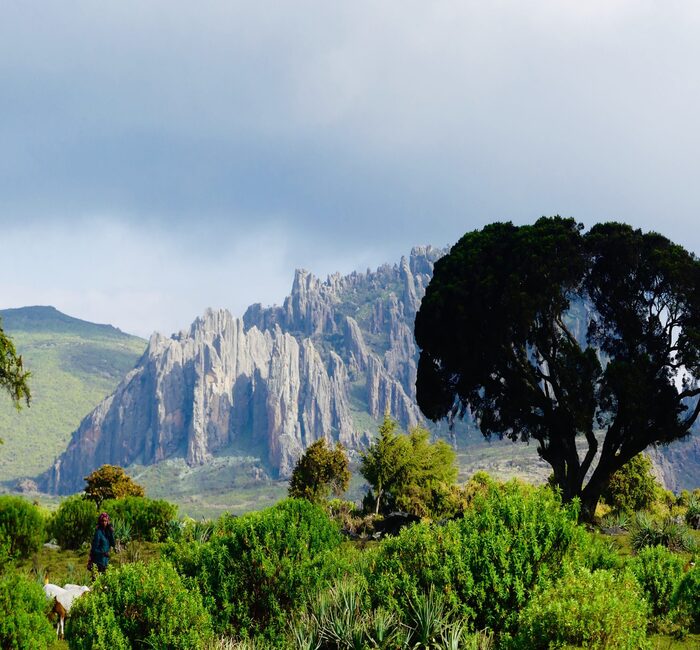
- The trekking in the Bale Mountains and Simien Mountains National Parks which offer the most spectacular landscapes, beautiful vistas and a thrilling experience of trekking at above 4000 metres/13,000 feet. Ethiopia is sometimes called the roof of Africa as most of the highlands of the continent are concentrated here. Simian mountains national park holds the highest peak of the country which is 4543m. The simiens are a dramatic landscape of green carpeted gorges and chasms which are home to some of the country’s rare and endemic specious. It is relatively easy to see large troops of gelada baboons, shaggy maned primates with bright red patches of flesh on their chests, grazing on the vegetation, which are found only in Ethiopia’s mountains. You are less likely to see two of its other rare creatures, the walia ibex and the simien wolf, the rarest of the world’s canine species. Walking in these mountains, watching lammergeyer vultures swoop into deep ravines, offers one of the scenic highlights of travel in Africa. These parks are best for bird watchers too specially bale mountains national park is really best for birding and wild life.
- Southern Ethiopia will allow you to experience the lifestyles of ancient tribes and local nature. In Arba Minch, you can take a boat trip on Lake Chamo and see the crocodiles, hippopotamuses and aquatic birds. Close to Arba Minch, you can visit the mountain villages of Dorze and Chencha where you can visit traditional markets, visit the homes of potters and weavers and enjoy treks through the pleasant green countryside. Arba Minch is also the gateway to Omo Valley where you can visit local tribes and see their unique way of life when traveling to Ethiopia.
